 Low Calorie
 High Protein
 Keto
Keto Family Style
 Healthy Snacks
 Custom Meals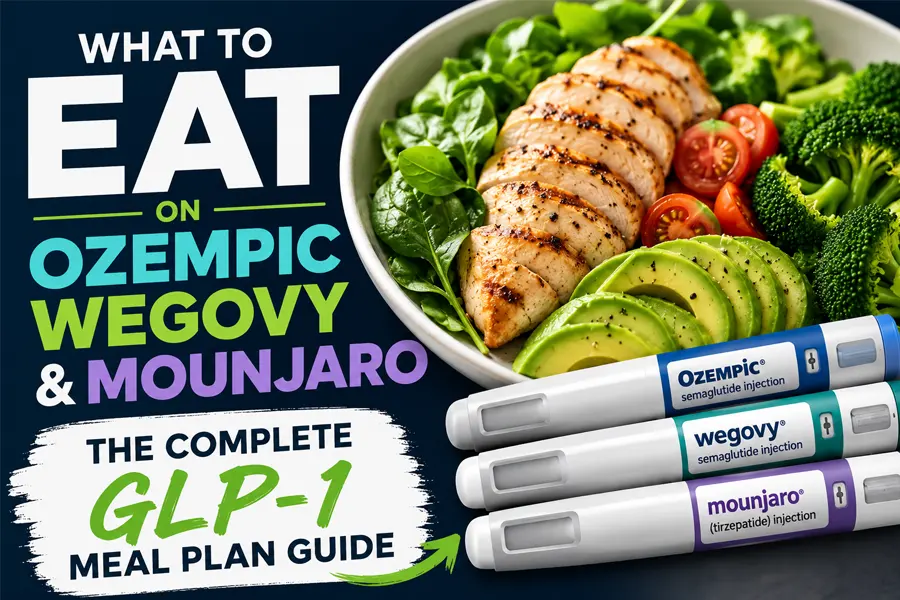
What to Eat on Ozempic, Wegovy & Mounjaro: The Complete GLP-1 Meal Plan Guide
If you've started Ozempic®, Wegovy®, or Mounjaro®, you already know the strangest part isn't the injection — it's how quiet your appetite gets. Meals you used to look forward to suddenly feel like a chore. That's the medication working as intended: GLP-1 receptor agonists slow digestion and dial down hunger signals from the brain, which is exactly how they help with weight loss.
But there's a catch nobody warns you about clearly enough: eating less doesn't automatically mean eating well. When your appetite drops, it's easy to skip meals, undershoot your protein, or live on whatever's easiest to get down — and the research on what that does to your body is worth understanding before it happens to you.
Why Nutrition Matters More, Not Less, on GLP-1 Medications
Here's the part that surprises most people: a meaningful share of the weight lost on GLP-1 medications isn't fat. A 2026 meta-analysis of nine randomized controlled trials found that lean mass accounted for roughly 30.8% of total weight lost during GLP-1 therapy — muscle, not just fat, coming off the body. Earlier trial data (STEP 1 and SUSTAIN 8) put the semaglutide-specific number closer to 30–39% of weight lost, depending on how it's measured.
That matters because muscle isn't just for looking toned. It's your metabolic engine, your mobility, and one of the biggest predictors of healthy aging. Losing it faster than necessary works against the exact goals most people start a GLP-1 medication to achieve.
The encouraging news: this isn't a reason to fear GLP-1 medications, and it isn't inevitable. The SEMALEAN study found that while lean mass dipped in the first seven months of semaglutide treatment, it stabilized after that, and handgrip strength actually improved by an average of 4.5 kg over 12 months — a sign that adequate protein intake and muscle function can hold up well on these medications when nutrition is dialed in.
How Much Protein Do You Actually Need?
The standard U.S. dietary recommendation is 0.8 grams of protein per kilogram of body weight — a baseline built for sedentary adults who aren't actively losing weight. It's too low for someone on a GLP-1 medication. Because active weight loss increases the body's demand for amino acids to preserve lean tissue, most obesity-medicine dietitians recommend 1.2 to 1.6 grams per kilogram of body weight, and up to 2.0 g/kg for people who are also doing resistance training.
| Body weight | Standard RDA (0.8 g/kg) | GLP-1 target (1.2–1.6 g/kg) | With resistance training (up to 2.0 g/kg) |
|---|---|---|---|
| 130 lb | 47g | 71–94g | up to 118g |
| 150 lb | 54g | 82–109g | up to 136g |
| 180 lb | 65g | 98–131g | up to 163g |
| 200 lb | 73g | 109–145g | up to 181g |
| 220 lb | 80g | 120–160g | up to 200g |
Those numbers can feel intimidating when your appetite barely wants breakfast, let alone 100+ grams of protein spread across a day. The practical fix dietitians recommend: eat your protein first, before anything else on the plate, at every meal and snack — so if your appetite fades halfway through, you've already gotten the part that matters most.
The GLP-1 Plate Method
You don't need to track every gram. A simple visual framework does most of the work: build each meal around protein first, fiber-rich vegetables second, and smart carbohydrates and fats filling in the rest.
Foods That Work With Your Medication — and Foods That Fight It
GLP-1 medications already slow gastric emptying, which is part of why they curb appetite. Certain foods amplify the nausea and discomfort that can come with that slowdown, while others help you get nutrition in without triggering symptoms.
| Lean into | Go easy on |
|---|---|
| Lean proteins: eggs, poached chicken, fish, Greek yogurt, cottage cheese | Fried and greasy foods — high fat slows digestion even further |
| Bland, easy-to-digest carbs: rice, toast, crackers, oatmeal | Very sweet or heavy desserts, which can worsen nausea |
| Broths, soups, and other water-rich foods for hydration | Carbonated and heavily caffeinated drinks with meals |
| Small, frequent meals instead of three large ones | Gas-forming vegetables in large portions: broccoli, cabbage, onions, Brussels sprouts |
| Ginger or peppermint tea between meals | Eating quickly or lying down right after a meal |
Quick nausea-management checklist
If nausea is the main obstacle to eating enough, a few small habits go a long way: eat slowly and without distractions, stop at the first sign of fullness rather than pushing through, avoid strong cooking smells when you can, skip large drinks during meals, and give yourself at least 30 minutes upright after eating before lying down.
Sample One-Day GLP-1 Meal Plan
Here's what a realistic day looks like for someone targeting roughly 90–100g of protein across small, manageable meals — the kind of structure that's easy to hit with pre-portioned meals and harder to hit from scratch when your appetite is unpredictable.
| Meal | Example | Approx. protein |
|---|---|---|
| Breakfast | Greek yogurt with berries, or a veggie egg scramble | 20–25g |
| Mid-morning snack | String cheese or a protein shake | 10–15g |
| Lunch | Grilled chicken over greens with a light vinaigrette | 25–30g |
| Afternoon snack | Cottage cheese or a handful of edamame | 10–12g |
| Dinner | Baked fish or lean beef with roasted vegetables and a small portion of rice | 25–30g |
Notice what's not on this list: three large, traditionally-plated meals. Small and frequent almost always beats large and infrequent when your appetite is working against you.
Prefer not to build every meal from scratch?
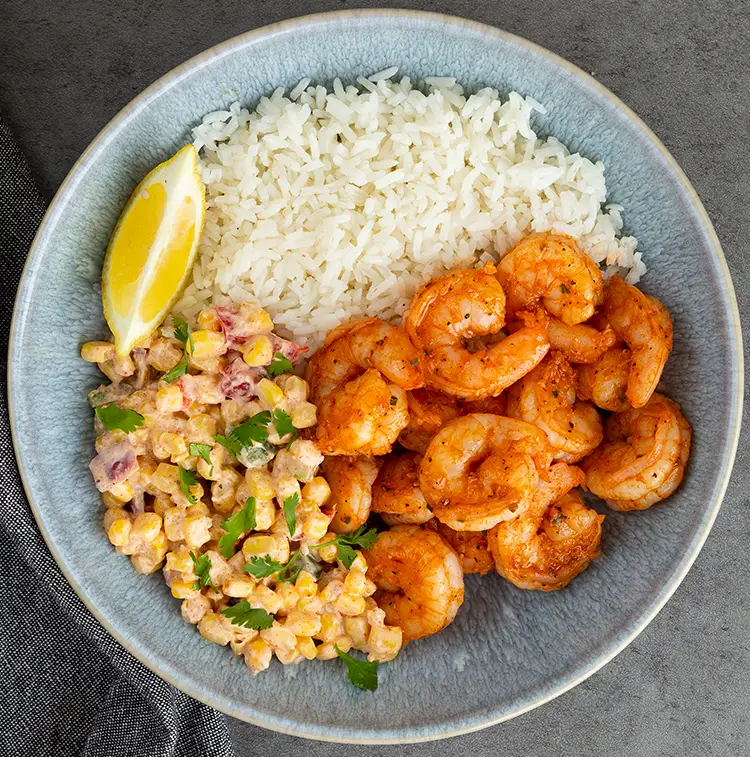
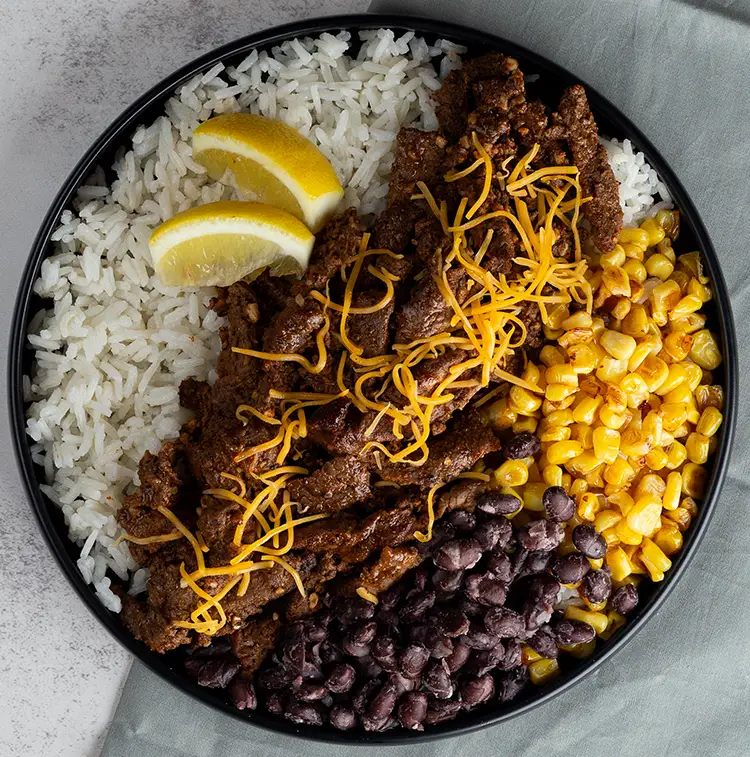
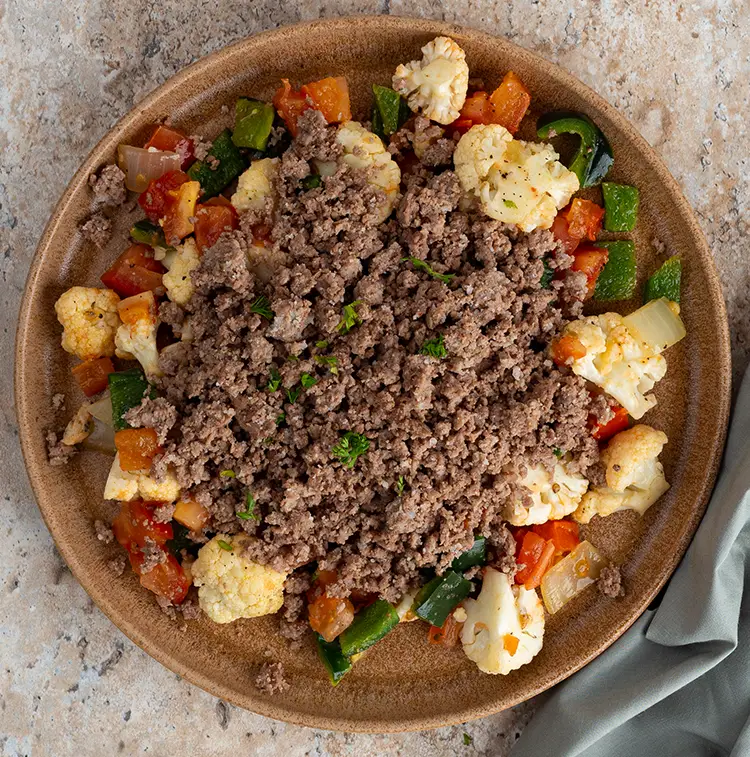
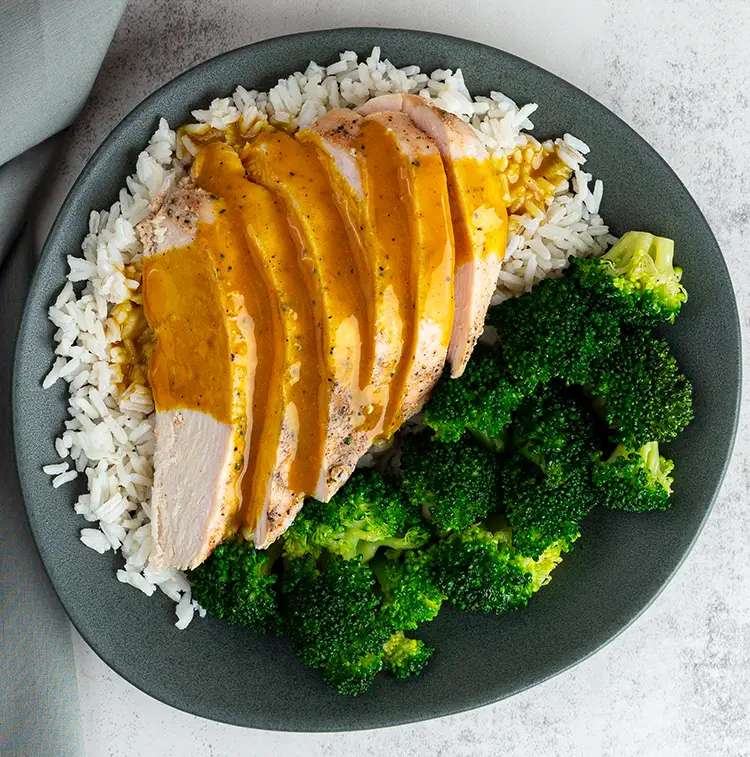
This is exactly the gap ProMeals' GLP-1 meal line was built to close — chef-prepared, portion-controlled meals under 500 calories with protein built in, delivered fresh across Houston. No planning, no macro math, no guessing whether today's meal will actually hit your protein target.
See our GLP-1 Meals ?If you'd rather build your own plate from ProMeals' broader menu, the High Protein Meals and Low Calorie Meals lines follow the same protein-first, portion-controlled principles covered in this guide.
Frequently Asked Questions
1. How much protein do I really need on Ozempic or Wegovy?
Most obesity-medicine dietitians recommend 1.2–1.6 grams of protein per kilogram of body weight — noticeably higher than the standard 0.8 g/kg dietary guideline — because active weight loss increases the body's need for amino acids to preserve muscle. See the body-weight table above for specific gram targets.
2. Why am I losing muscle, not just fat, on a GLP-1 medication?
Research shows that roughly 30% of the weight lost during GLP-1 therapy comes from lean mass rather than fat. This is a normal part of rapid weight loss on any method, but it's more pronounced on GLP-1s because appetite suppression can make it hard to eat enough protein. Adequate protein intake and resistance training are the two biggest levers for minimizing it.
3. What should I eat if I have almost no appetite?
Prioritize protein first, before anything else on the plate, and lean on smaller, more frequent meals rather than three large ones. Easy-to-digest options like Greek yogurt, eggs, cottage cheese, and protein shakes are usually easier to get down than dense, heavy meals.
4. Why does GLP-1 medication make certain foods harder to tolerate?
GLP-1 receptor agonists slow gastric emptying — food sits in the stomach longer, which is part of how they curb appetite. High-fat, fried, and very sweet foods slow digestion even further and are the most common nausea triggers reported by patients.
5. Can meal delivery help with GLP-1 nutrition goals?
Yes. Pre-portioned, protein-forward meals remove the two hardest parts of eating well on a GLP-1 medication: deciding what to make when you don't feel like cooking, and hitting a protein target without over- or under-eating. Services built specifically for GLP-1 users, including ProMeals' GLP-1 Meals line, are designed around exactly this problem.
Sources
- Effect of GLP-1 receptor agonists at doses for obesity management on muscle health: systematic review and meta-analysis of RCTs — International Journal of Obesity, 2026
- About 31% of weight lost by adults during GLP-1 therapy comes from lean mass — Healio, coverage of body composition research
- Impact of Semaglutide on fat mass, lean mass and muscle function in patients with obesity: The SEMALEAN study — PMC / National Institutes of Health
- How Much Protein to Eat on GLP-1: Expert Guidelines — Fella Health, obesity medicine guidance
- Avoid These Foods While Taking Ozempic — Cleveland Clinic
- What to Eat on Ozempic to Avoid Nausea — Medical News Today